
FMCSA Safety Scores and Inspections Explained

Introduction
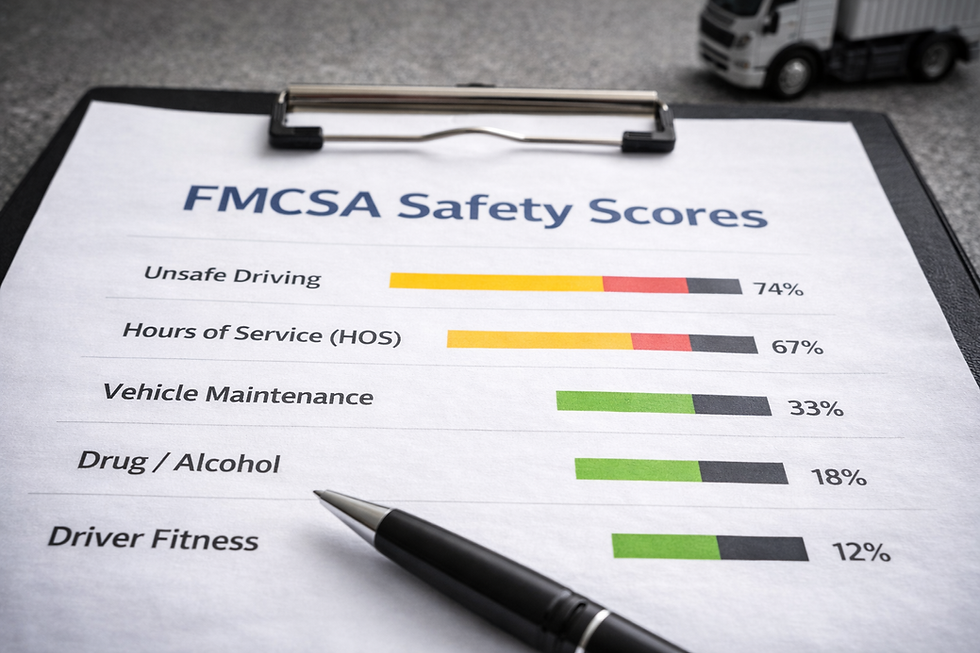
FMCSA safety scores are used to identify trucking companies that pose a higher safety risk based on inspection and crash data. These scores are built primarily from roadside inspections and are used to prioritize audits, interventions, and enforcement actions. Understanding how safety scores work and how inspections affect them is essential for trucking companies and owner-operators who want to control compliance risk.
What Are FMCSA Safety Scores?
Definition
FMCSA safety scores are performance indicators used by regulators to evaluate a motor carrier’s compliance with federal safety regulations based on inspection, violation, and crash data.
Safety scores are not random or subjective. They are calculated from enforcement data and compared against other carriers with similar operations.
What Data Is Used to Calculate Safety Scores?
Roadside Inspection Data
Each roadside inspection contributes data points, including:
Type of inspection conducted
Violations cited
Out-of-service determinations
Time and location of enforcement
Inspections without violations still matter, but violations carry the most weight.
Crash Reports
Reportable crashes are added to a carrier’s safety history and increase scrutiny, even if the carrier is not found at fault.
Violation Severity and Frequency
Violations are weighted based on:
Severity of the violation
Frequency of similar violations
Recency of the inspection
Recent and repeated violations increase enforcement priority.
How Inspections Directly Impact Safety Scores
Violation Weighting
Not all violations affect safety scores equally. Critical and acute violations have a greater impact than minor documentation errors.
Pattern Recognition
FMCSA looks for trends, not isolated incidents. Multiple inspections with similar violations signal systemic compliance failures.
Time Factor
Older violations gradually lose impact, but they do not disappear immediately. Ongoing violations reset enforcement concern.
How FMCSA Uses Safety Scores
Audit and Intervention Selection
Safety scores are used to:
Trigger safety audits
Initiate compliance reviews
Increase inspection frequency
Justify enforcement actions
High-risk carriers are identified through data, not complaints.
Insurance and Business Impact
While safety scores are primarily for enforcement, insurance providers and brokers often review inspection history when evaluating risk.
Poor inspection patterns can affect:
Insurance premiums
Contract opportunities
Load access
Common Misunderstandings About Safety Scores
“One Bad Inspection Ruins Everything”
Single inspections rarely cause enforcement action. Repeated violations do.
“Clean Inspections Don’t Matter”
Clean inspections help offset prior violations and demonstrate compliance improvement.
“Scores Can Be Ignored if No Audit Happens”
FMCSA monitors continuously. Waiting for an audit is reactive and risky.
Practical Framework: How to Manage Safety Score Risk
Step 1 - Monitor Inspection Data
Review every inspection report promptly for accuracy and completeness.
Step 2 - Address Root Causes
Fix underlying issues, not just the violation outcome. Repeated violations indicate training or system failures.
Step 3 - Track Trends Over Time
Look for patterns in driver behavior, equipment issues, or operational gaps.
Step 4 - Document Corrective Actions
Written corrective actions demonstrate control and can mitigate enforcement severity.
Conclusion
FMCSA safety scores are a data-driven reflection of how a trucking company manages compliance and safety. Roadside inspections are the primary input, and patterns determine enforcement response. Trucking businesses that actively monitor inspections, address violations early, and document corrective actions maintain lower enforcement risk and greater operational stability.


Comments