
Guide to Vehicle Maintenance Files


Introduction
Vehicle maintenance files are required by FMCSA to prove that commercial vehicles are safe and properly maintained. These files are reviewed during roadside inspections and audits and are a frequent source of violations. For trucking companies and owner-operators, incomplete or disorganized maintenance files increase out-of-service risk and audit exposure.
What Are Vehicle Maintenance Files?
Definition
Vehicle maintenance files are records required by FMCSA that document the inspection, repair, and maintenance history of each commercial motor vehicle operated by a carrier.
These files demonstrate whether a carrier actively controls vehicle safety.
Which Vehicles Require Maintenance Files?
Applicability
FMCSA requires maintenance files for:
All commercial motor vehicles under a carrier’s authority
Power units and trailers
Leased or owner-operator equipment under long-term lease
Each vehicle must have its own file.
What Must Be Included in Vehicle Maintenance Files
Required Documents
FMCSA requires carriers to maintain:
Vehicle identification information
Preventive maintenance inspection records
Repair and maintenance documentation
Driver Vehicle Inspection Reports (DVIRs)
Annual DOT inspection reports
Missing any required record places the carrier out of compliance.
Preventive Maintenance Requirements
Ongoing Maintenance Obligations
FMCSA expects carriers to:
Perform regular inspections
Address reported defects promptly
Document all repairs and corrections
Verify vehicles are safe before dispatch
Maintenance must be proactive, not reactive.
DVIR and Defect Management
Driver Vehicle Inspection Reports
Drivers must report vehicle defects at the end of each workday.
Carriers must:
Review DVIRs
Repair safety-related defects before operation
Certify repairs in writing
Retain DVIR records as required
Unresolved DVIR defects are common inspection findings.
How Maintenance Files Are Used During Audits
Audit Focus Area
FMCSA audits evaluate maintenance files to determine:
Whether inspections are occurring regularly
Whether defects are corrected timely
Whether records match inspection findings
Discrepancies raise enforcement concern.
Common Vehicle Maintenance File Mistakes
Incomplete Records
Maintenance performed without documentation is treated as maintenance not performed.
Poor File Organization
Disorganized files slow audits and increase scrutiny.
Ignoring Trailers
Trailers are frequently overlooked but fully subject to maintenance requirements.
Practical Checklist: Vehicle Maintenance File Compliance
Maintain a separate file for each vehicle
Document all inspections and repairs
Track annual DOT inspection dates
Review and certify DVIRs daily
Retain records for required time periods
This checklist reflects enforcement reality.
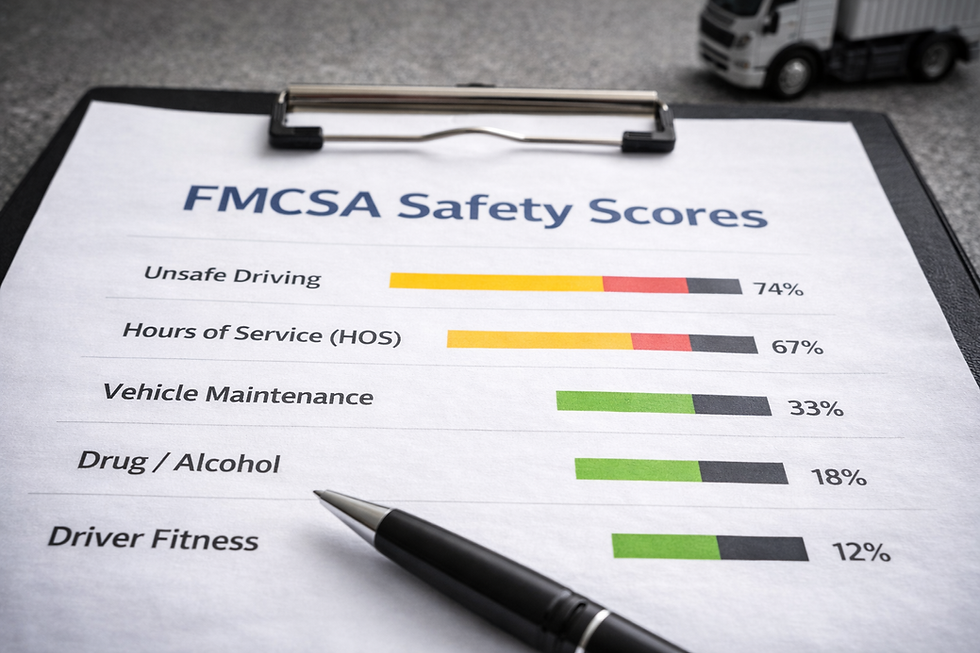
How Maintenance Files Affect Inspections and Safety Scores
Poor maintenance records contribute to:
Roadside inspection violations
Out-of-service orders
Increased audit likelihood
Deterioration of safety profiles
Conclusion
Vehicle maintenance files are a core FMCSA compliance requirement and a primary indicator of carrier safety control. Complete, accurate, and well-organized maintenance files reduce roadside violations, support audit success, and protect operating authority for trucking companies and owner-operators.


Comments